!
Latest updates
Thailand Tourist Visas, Entry Rules and Visa Runs
Updated 11th Sep 2026
Frequent Flyer Programmes in Thailand: Which Is Worth Joining
Updated 10th Sep 2026
Andaman or Gulf: Five Thai Coasts, When to Go, and the Airport for Each
Updated 10th Sep 2026
Thailand Travel Tips: Riding, Rules and What to Carry
Updated 10th Sep 2026
Thai Phrases for the Airport: What to Say at a Counter or Gate
Updated 10th Sep 2026
The Best Time to Visit Thailand
Updated 24th Aug 2026
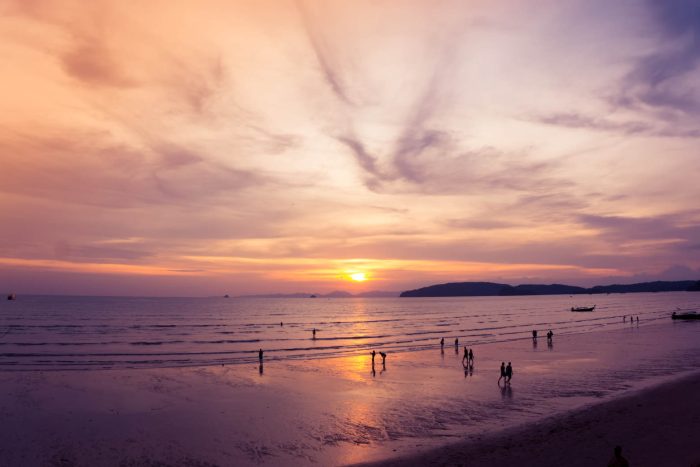
Thailand's year is usually divided into three seasons, and in the south the west and east coasts run on different patterns. In most of the country the cool season, November to February, is the easiest stretch of the year to travel in, and December and January are the busiest months for tourism. This page goes through the year a month at a time: the weather, the festivals worth planning around, and which parts of the country suit each point in it.
The west coast is the better side during the cool months for scuba diving and snorkelling. The east coast suits most of the year, with the lowest rainfall between January and February and the highest in November.
Thailand's three tourist seasons
The season model most travel guides use splits the Thai year into three, and the twelve months below sit inside it.
| Season | Months | What to expect |
|---|---|---|
| Cool season | November to February | In most of the country, the coolest stretch, with December and January the busiest months for tourism |
| Hot season | March to May | Temperatures rise across the country, and fewer people travel in April than in the cool season |
| Rainy season | June to October | The wettest stretch in most of the country, with rainfall easing off through September and October |
Several of the festival dates below move from year to year, because some follow the lunar calendar and others are set annually by their organisers. Check the current year's date before you book flights or a room around one.
January
January is peak season for tourism, with little chance of rain. Southern beaches get sunny days, and the cooler temperatures in central and northern Thailand suit trekking and sightseeing.
It is a good month for Sam Phan Bok, the rock formation in the Mekong known as the Grand Canyon of Thailand, out in Ubon Ratchathani province. Trang is the other January destination, with beaches, islands and mountains within reach of Trang Airport.
In years when the lunar date falls in January, Bangkok's Chinatown marks Chinese New Year. The Bo Sang Umbrella Festival runs from 16 to 18 January in 2026 in Bo Sang village, with painted paper parasols, folk dancing and food stalls.
February
Temperatures start to climb but stay comfortable for wandering around. Bangkok, the rest of central Thailand and the northern regions all warm up a little.
The Red Lotus Sea in Udon Thani, reached through Udon Thani Airport, blooms roughly from late October to February and is usually at its fullest in December and January, so a February visit catches the end of it rather than the peak.
Makha Bucha, a Buddhist holiday and a Thai national holiday, often falls in February, and Bangkok's Wat Saket is one place to see the rituals. Prachinburi holds its own Makha Bucha fair, with processions, cultural demonstrations and a lantern release.
The Chiang Mai Flower Festival runs from 13 to 15 February in 2026 at Nong Buak Haad Public Park, with a parade and displays of chrysanthemums and Damask roses.
March
March is warm across the country, with temperatures rising on both coasts. It is a straightforward month for beaches and water sports.
The Pattaya International Music Festival is free to attend and runs on Fridays and Saturdays throughout March at several venues, so landing at U-Tapao Airport at any point in the month catches some of it. National Muay Thai Day falls on 17 March.
April
April is hot, and quieter for tourism than the cool season. It also carries Songkran, the Thai New Year, on 13 to 15 April in 2026, when scented water is poured over people and thrown in the street to wash away bad luck.
Bangkok, Phuket and Chiang Mai are the usual choices for it.
Drink plenty of water and use sunscreen. Accommodation with air conditioning is worth paying for in April.
May
Rain stays light through most of May, and the east coast is typically the more reliable side for sunshine. It is a good month for the quieter parts of the country.
Chanthaburi holds the World Durian Festival from 1 to 5 May, with competitions, games, parades and fruit tasting.
The Bun Bang Fai festival sends rockets into the sky in the hope of bringing rain.
Visakha Bucha Day is marked at Doi Suthep in Chiang Mai and at the Temple of the Emerald Buddha in Bangkok. It commemorates the birth and the death of the Buddha.
June
June brings rain, though many regions still get sunshine and high temperatures alongside it.
The Hua Hin Jazz Festival's dates have moved a long way in recent years: late August in 2024, 19 to 20 December in 2025, and 29 May to 1 June in 2026. Check the current listing rather than planning around a month.
The Phi Ta Khon festival is held at Dan Sai in Loei province, where people dress in ghost costumes, mark their faces and parade through the streets. The dates are set each year by a spirit medium and typically land in late June or early July; in 2026 they are 20 to 22 June, so confirm the year's dates before you book a flight into Loei Airport.
Pa Hin Ngam National Park in Chaiyaphum has its fields of Siam tulips at this point in the year.
July
July's weather is much like June's, with drizzle mixed into long spells of sunshine.
Asahna Bucha Day falls this month. It commemorates the day the Buddha delivered his first sermon.
The Gulf coast, including Hua Hin and Koh Samui, sees relatively little rain in July, and Pattaya is another low-rainfall option that month.
August
August is the green month. Even in the rain, the rural provinces are worth the trip, Mae Hong Son among them.
12 August is a public holiday, National Mother's Day, so expect government offices and some banks to be closed.
If your plans take in north-eastern Thailand, pack an umbrella, a raincoat and something waterproof for a bag.
Chiang Mai and Sukhothai suit a wet month, because the draw at both is culture and history rather than beach weather.
September
September sees a general improvement in the weather. Rainfall starts to decline in most regions and temperatures begin to fall, with clear skies between the showers.
The islands in the Gulf are the pick of the month, and Koh Samui Airport puts you on one of them directly. Bophut Beach and the restaurants and bars of Fisherman's Village are both on Koh Samui.
Bangkok's Car Free Day ran from 22 to 28 September in 2025, around World Car Free Day on 22 September. Longboat racing takes place in the central, northern and north-eastern regions around the same time. National Flag Day is on 28 September.
October
October is the shoulder season, and it sees fewer visitors than the peak months.
Ok Phansa, which marks the end of Buddhist Lent, falls in October in most years. It is set for the 15th day of the waxing moon in the 11th lunar month, which is 26 October in 2026, so like Loy Krathong it moves with the lunar calendar.
The rain is not finished, and the month is a mixture of drizzle and sunshine across the country, so keep an umbrella with you. The warm temperatures make it a good month for the countryside and for the rice fields in the north and north-east.
The developed islands are still an option, Koh Samui and Phuket among them, and Phuket is served by Phuket Airport. For a beach break, Hua Hin, Cha-Am and Pattaya are the other choices.
November
Heavy rainfall drops off in November and temperatures get colder. The air is less humid than in September and October, which makes sightseeing more comfortable.
Bangkok and Chiang Mai get lower rainfall in November than the Gulf of Thailand and the Andaman coast. If that points you at the capital, read up on getting around Bangkok before you land, whichever of the city's two airports you fly into: Bangkok Suvarnabhumi Airport or Bangkok Don Muang Airport.
The weather on the southern peninsula is unpredictable in November, though that is not a reason to rule out Koh Samui.
Loy Krathong falls in November, though the date changes every year with the lunar calendar. Krathongs, the decorated floats the festival is named for, are launched on rivers, lakes, beaches and islands nationwide.
December
December is one of the better months to visit, and one of the busiest for tourism.
Chiang Mai and Chiang Rai are moderately cold, though plenty of people are still in short sleeves during the day. Pai, up in the hills, can be cold at night. Further south the gap between day and night temperatures is smaller than it is in the north.
Christmas and New Year bring their own crowd. Thailand is a Buddhist country, but Christmas trees appear in the shops and Santa hats on the staff, and Bangkok and Pattaya both run countdown events on 31 December.
If you are moving between destinations by air in December, it is worth reading how domestic flights in Thailand work and the six steps to grabbing cheap flights before you book.
Choosing when to go
There are better and worse times for particular regions, and a few trade-offs to weigh before you fix dates.
The west coast is at its best for diving and snorkelling in the cool months. A trip built around boat days at Phuket in the middle of the rainy season is a weaker bet than the same trip in January or February.
In much of the country, December and January bring the most comfortable weather of the year and the heaviest crowds at the same time, because those are the peak months for tourism. The beaches and the temples are at their fullest in the same weeks that the conditions are at their best.
The trade-off people miss is festival dates. The Hua Hin Jazz Festival has run in August, in December and in late May across three consecutive years, and Phi Ta Khon's dates are set each year by a spirit medium. An itinerary built around either can be wrong before it is booked.
If your trip depends on a particular festival, confirm this year's date before you book anything. If it depends on the sea, choose the coast that suits the month you are able to travel in.