!
Latest updates
Hua Hin Airport (HHQ): one scheduled route, and the international plan
Updated 15th Oct 2026
Surat Thani Airport (URT): the mainland way to Koh Samui, Koh Phangan and Koh Tao
Updated 15th Oct 2026
U-Tapao Rayong-Pattaya International Airport (UTP): who runs it and what is being built
Updated 15th Oct 2026
Nakhon Si Thammarat Airport (NST): the 2023 terminal, airlines and getting into the city
Updated 15th Oct 2026
Hat Yai Airport (HDY): terminals, getting into town and Bangkok flights
Updated 15th Oct 2026
Bangkok Destination Guide
Updated 3rd Sep 2026
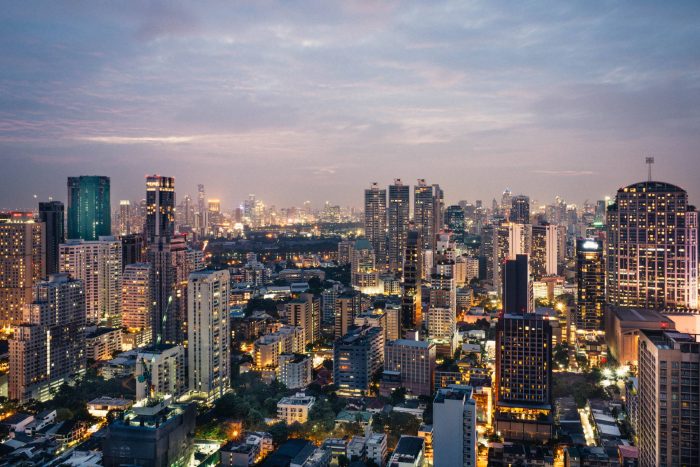
Bangkok is arranged along two urban rail networks, the BTS and the MRT, run respectively by Bangkok Mass Transit System and the Mass Rapid Transit Authority of Thailand, and a river with a scheduled boat service running down it. Knowing which of the three reaches where you are going is most of what a first visit needs.
The old city, where the headline sights are, and the Khao San Road area beside it are the two parts of Bangkok with no BTS or MRT station. This page covers the districts and the line that reaches each, the well-known sights with their opening hours and dress codes, what the seasons do to a day out, and why Bangkok is the country's domestic aviation hub.
How the city is laid out
The easiest way to hold Bangkok in your head is as a set of districts strung along the rail map, with the old city as the exception that is not on it. The detail on the lines themselves is in our guide to getting around Bangkok.
| District | What you go there for | Nearest station or pier |
|---|---|---|
| Rattanakosin, the old city | The Grand Palace, Wat Phra Kaew, Wat Pho and the National Museum | No station inside it. MRT Sanam Chai, or the river boat to Tha Chang or Tha Tien |
| Banglamphu and Khao San Road | The backpacker strip, guesthouses and street stalls | No station. The river boat to Phra Arthit pier |
| Siam | The commercial centre of the modern city, and four shopping centres joined by skybridge | BTS Siam, the only interchange between the two BTS lines |
| Sukhumvit | The most international strip, busiest near the Nana end and more local out towards Thonglor and Ekkamai | BTS Sukhumvit Line throughout, and the MRT interchange near Asoke |
| Silom and Sathorn | Offices by day. Silom is the centre of the city's nightlife and its LGBTQ+ scene after dark; Sathorn is quieter and more corporate | BTS Silom Line at Sala Daeng and Chong Nonsi, and the MRT Silom interchange |
| Chinatown, or Yaowarat | Street food, gold shops and traditional Chinese medicine dealers, at their busiest after dark | MRT Wat Mangkon. No BTS line reaches it directly |
| Thonburi, the west bank | Canals, stilt houses and Wat Arun, on the quieter side of the river | BTS Krung Thonburi, Wutthakat or Talat Phlu, and MRT Bang Phai |
| Khlong Toei | The port area and a working produce, flower and clothing market. The administrative district of the same name is much larger and reaches into upper Sukhumvit | MRT Khlong Toei |
| Ari | Independent cafes and street food, a few stops north of Siam and more local than the tourist strips | BTS Ari |
If you are choosing where to base yourself, the practical question is which line you will use most. Siam is where the two BTS lines meet, and it is connected by skybridge to Siam Paragon, Siam Centre, Siam Discovery and Siam Square One. Sukhumvit becomes more residential the further east you go, while Ari and Thonburi are quieter and further from the sights.
Getting to the old city and Khao San Road
Neither Rattanakosin nor Banglamphu has a BTS or MRT station. That is worth knowing before you plan a first day here, because the Grand Palace, Wat Phra Kaew, Wat Pho and the National Museum are all in the first of them.
The nearest station to the old city is Sanam Chai on the MRT Blue Line, about fifteen minutes on foot from the Grand Palace and under ten from Wat Pho. The alternative is the river. The Chao Phraya Express Boat calls at Tha Chang, beside the Grand Palace, and at Tha Tien, behind Wat Pho.
For Khao San Road the usual route is the BTS to Saphan Taksin, the express boat from Sathorn pier to Phra Arthit pier, then about ten minutes on foot. Published information on the express boat's weekend service is inconsistent, so check at the pier rather than assuming a Saturday or Sunday sailing.
The well-known sights
These are the well-known sights covered on this page, with hours as published in early September 2026. The lesser-known places have their own page, our guide to hidden gems in Bangkok.
The Grand Palace and Wat Phra Kaew
The Grand Palace and Wat Phra Kaew, the temple that holds the Emerald Buddha, are one ticketed complex in the old city. The palace's own site gives daily opening of 8.30am to 4.30pm, with ticket sales and last entry at 3.30pm. There is an entry charge.
More than once in 2026 the complex has suspended all visitor access with only a few days' public notice. It was operating its normal hours as of early September 2026, so it is worth checking the current status before you build a day around it.
Wat Pho
Wat Pho, also called Wat Phra Chetuphon, holds the reclining Buddha image and is where traditional Thai massage has long been taught. It is an eight-minute walk from Sanam Chai station and a short walk from the Grand Palace.
Published hours vary, but Wat Pho is generally open daily from about 8am until about 6.30pm. Confirm them on the day if you are arriving late in the afternoon.
Wat Arun and the crossing to Thonburi
Wat Arun, known in English as the Temple of Dawn, stands on the Thonburi bank directly across the water from Wat Pho. The cross-river ferry from Tha Tien pier takes about three minutes and boats run every few minutes from early morning until late evening.
The temple is generally open daily from about 8am to 6pm, with last entry shortly before closing. Confirm them on the day if you are visiting late in the afternoon. Its dress code is enforced at the entrance, as it is at the Grand Palace.
Jim Thompson House Museum
The Jim Thompson House Museum is in the Siam area, about four minutes' walk from BTS National Stadium via Exit 1 and Soi Kasemsan 2. It opens daily from 10am to 5pm and entry is by guided tour only, with the last tour at 5pm. No advance booking is needed.
Tickets are sold only at the museum's own ticket office on site, and the museum warns visitors against buying them through any online platform. That is worth knowing before you pay for something that looks official.
Chatuchak Weekend Market
Chatuchak is Bangkok's largest market, and the full market runs on Saturday and Sunday only, from 9am to 6pm. Wednesday and Thursday are the plant and nursery section alone, and Friday evening is wholesale. Turn up on a Tuesday expecting the weekend market and you will find a fraction of it.
MRT Kamphaeng Phet on the Blue Line comes out almost inside the market. MRT Chatuchak Park and BTS Mo Chit are the alternatives, and Mo Chit is about 1.3 km away on foot.
Wat Traimit, in Chinatown
Wat Traimit holds what is reported to be the world's largest solid gold Buddha image, and the temple opens daily from 8am to 5pm. The museum inside it keeps the same hours from Tuesday to Sunday and closes on Mondays.
Dress codes at the temples and the palace
Dress for the Grand Palace and you are covered for Wat Pho and Wat Arun too. That means trousers or a skirt that fully covers the knees, a top with sleeves covering both shoulders, and closed shoes or sandals with a strap. Torn clothing and see-through fabric are turned away.
The rules are checked at the gate, and the Grand Palace rents out sarongs and tops at the entrance to visitors who arrive under-dressed. Inside temple buildings, shoes come off.
Two attractions that changed in 2026
Cave Fantasy opened on the fourth floor of MBK Center in Siam in January 2026, a few minutes from BTS National Stadium. It is an immersive digital-art attraction with nine themed projection galleries and a naked-eye 3D theatre at the end.
The Bangkok Planetarium, part of the Science Center for Education on Sukhumvit Road, closed around the end of March 2026 for a renovation expected to run about eight months, and is not due back before late 2026. It is not a stop to build a family day around yet.
When to come
What separates Bangkok's seasons for a visitor is the rain, the heat and the air. April is the hottest stretch, with daytime highs reported between 35 and 39 degrees Celsius.
In that heat, do the outdoor sightseeing before about 10am or after about 4pm. Temple courtyards are hard stone with long queues and little shade, and the air-conditioned trains and shopping centres are the obvious refuge in the middle of the day.
Heavy afternoon downpours are the pattern through the middle of the year and into October, and September and October are the worst of it for street flooding. The courtyards at the Grand Palace and Wat Pho, and Chatuchak's outdoor lanes, have little shelter, so a storm can end an outdoor visit rather than pause it. Street flooding after heavy rain is normal here rather than an emergency, but it is the roads that suffer, and a September downpour can leave a taxi stuck.
November to February is the driest and most comfortable stretch for walking, and it is also the worst air of the year, at its worst in January and February. A walking-heavy day in the old city in January gets you the best weather and the worst air at the same time.
Songkran and Loy Krathong
Songkran, the Thai new year, fell on 13 to 15 April in 2026, with the water throwing building up from around the 11th. The named Bangkok water-fight zones that year included Silom Road, Siam Square and Khao San Road, which are three of the districts in the table above. Mid-April is not the time to plan a dry walk through any of them.
Loy Krathong falls on the full-moon night of the twelfth month in the Thai lunar calendar, which puts it in November, and the exact date is confirmed only shortly beforehand. In Bangkok the riverside, the canals and Lumpini Park are the customary focal points.
Bangkok as the domestic flight hub
Bangkok has two operating airports, Suvarnabhumi Airport (BKK) and Don Mueang International Airport (DMK), and both are open around the clock. Airports of Thailand (AOT) runs the pair. Bangkok is the country's main international gateway and its domestic hub, and almost every route this site covers starts or ends at one of these two airports.
The split between the two is about which airline you are flying rather than where you are going. Don Mueang is where the low-cost domestic operation is concentrated, Suvarnabhumi is the full-service and international gateway, and some carriers use both. Which airport a route uses can also change, so check the airport printed on your booking rather than the one you used last time.
Which airport a particular carrier uses is on that airline's own page, such as our guide to Bangkok Airways. The wider picture of routes and airlines is in our Bangkok flights guide.
The two airports sit on opposite sides of the city and there is no rail link between them, so a connection that changes airport means a road journey across Bangkok. If you are arriving from abroad and flying on the same day, read our guide to transfers between Suvarnabhumi and Don Mueang before you book the second leg.
The route pages carry the schedule for each pair, including Bangkok to Chiang Mai, Bangkok to Phuket, Bangkok to Krabi and Bangkok to Koh Samui.
If you are fitting the city around a domestic flight rather than the other way round, two things are worth checking before anything else: which of the two airports your ticket actually uses, and whether the Grand Palace is open on the day you have set aside for it.