!
Latest updates
Hua Hin Airport (HHQ): one scheduled route, and the international plan
Updated 15th Oct 2026
Surat Thani Airport (URT): the mainland way to Koh Samui, Koh Phangan and Koh Tao
Updated 15th Oct 2026
U-Tapao Rayong-Pattaya International Airport (UTP): who runs it and what is being built
Updated 15th Oct 2026
Nakhon Si Thammarat Airport (NST): the 2023 terminal, airlines and getting into the city
Updated 15th Oct 2026
Hat Yai Airport (HDY): terminals, getting into town and Bangkok flights
Updated 15th Oct 2026
Phuket Destination Guide
Updated 27th Aug 2026
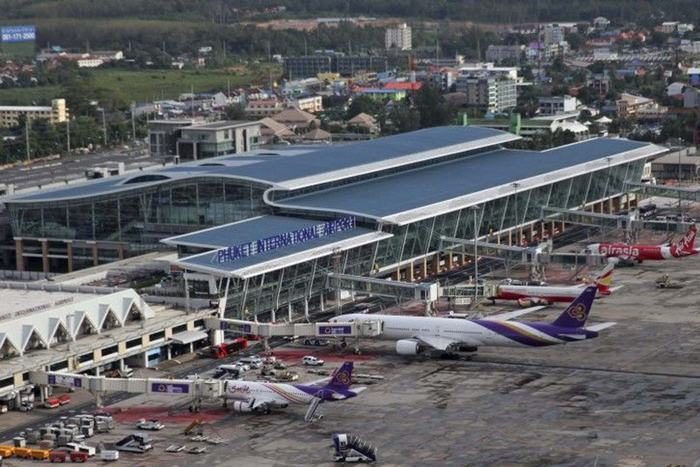
Phuket is Thailand's largest island, 543 square kilometres in the Andaman Sea off the country's southern west coast. It is joined to the mainland by road bridge rather than reached by ferry, and it has its own international airport. This page is the overview: what the island is, how you get there, when to come, and where the detail on this site sits.
Getting there by air
Phuket International Airport (HKT) sits at Mai Khao in Thalang district, in the north of the island, about 32 kilometres from Phuket Town. The drive down to Patong typically takes anything from 45 minutes to an hour and a quarter, depending on traffic.
International and domestic flights use separate terminals, joined by an internal walkway. The terminal layout and the ground transport options are set out on Phuket Airport, and the air links themselves are on flights to and from Phuket.
This site carries route pages for Bangkok to Phuket, Chiang Mai to Phuket, Koh Samui to Phuket and Hat Yai to Phuket, with Phuket to Bangkok for the return leg.
Phuket Town and the west coast
Phuket Town, the provincial capital in the southeast, is the administrative and historic centre, built around Sino-Portuguese shophouse streets. The tourist beach strip is on the other side of the island, on the west coast: Patong, Karon and Kata in the middle, with Kamala, Surin and Bang Tao further north.
Book a beach hotel expecting the Old Town on the doorstep and you have picked the wrong side of the island. Beach-by-beach detail is in the beaches of Phuket, and renting a house rather than booking a hotel room is covered in house rental on Phuket.
Tin mining and the Old Town
Phuket was a mining island before it was a holiday one. Tin has been mined here for centuries, and the boom that shaped the place came in the 19th century, worked overwhelmingly by Hokkien Chinese immigrant labour. By around 1890 the island's Chinese population is estimated to have reached close to 50,000, well above the Thai and Malay population of the time.
The shophouse district around Thalang, Phang Nga, Krabi, Dibuk and Yaowarat Roads is what that money built, and it was well established by the early 1900s, in a style blending Chinese and Portuguese-colonial design: commercial ground floor, family home above. The same immigration is why a large part of the island's population descends from Chinese settlers.
In December 2015 Phuket was named a Creative City of Gastronomy by the United Nations Educational, Scientific and Cultural Organization (UNESCO), the first city in Thailand and in the Association of Southeast Asian Nations (ASEAN) to hold that designation. UNESCO lists the city on its Creative Cities page.
Tin mining left derelict land as well as money, and the ground at Bang Tao Bay on the west coast took ten years to regenerate before Banyan Tree opened its first resort there in 1994. The company credits that opening with starting the destination-spa format that spread through Asia's luxury resorts.
Temples, shrines and the Big Buddha
Wat Chalong, officially Wat Chaiyathararam, is the island's largest and most-visited Buddhist temple, recorded from 1837, and entry is free. Its place in Phuket's history is the Angyee Rebellion of 1876, when two of its monks treated the wounded and mediated between the Chinese tin-miner rebels and the Thai administration. Both monks were later formally honoured for that.
Wat Phra Nang Sang is the island's oldest temple, although sources disagree on its age by several centuries. It is known as the Temple of the White Blood, after the folklore of a woman executed for adultery who was found innocent when her blood ran white. The Put Jaw shrine in Phuket Town, also called Kuan Im Teng, is a Hokkien Chinese shrine to Guan Yin, the Chinese goddess of mercy, built roughly 200 years ago with a renovation recorded in 1908.
The Big Buddha, Phra Phutta Ming Mongkol Eknakiri, is a 45-metre statue clad in white Burmese marble on Nakkerd Hill, visible from much of southern Phuket. The site was closed on 23 August 2024 after a landslide there killed 13 people. It reopened on 3 March 2026, and entry is free with the dress code enforced.
When to come
Phuket has two seasons. The dry, high season runs from November to April, with the most reliably sunny weather between December and March. The wet season, the southwest monsoon, runs from May to October, with rain building from May and peaking around September.
The monsoon changes what a beach holiday on the west coast actually consists of. The sea there is rougher through those months and red-flag swimming warnings are common.
The Vegetarian Festival
The Phuket Vegetarian Festival, also called the Nine Emperor Gods Festival, is a nine-day Taoist observance held each year in the ninth lunar month, which usually falls in October; in 2026 it runs in mid-October. It comes from the same Chinese immigrant community that built the Old Town, and tradition holds that it began roughly 200 years ago as a ceremony to pray for the end of an epidemic.
It is a street event, and its central rituals include body piercing by participants, which is not what the festival's name suggests.
What there is to do
The west coast and the islands off it are a diving and snorkelling base. Sirinat National Park runs along the northwest coast and takes in the land around the airport.
Sea canoeing in Phang Nga Bay, the limestone bay between Phuket and the mainland, launches from Ao Por on Phuket's northeast coast. Inflatable canoes pass through narrow sea caves into hongs, lagoons hidden inside the collapsed centres of the islands, reachable no other way and some only around low tide.
Speedboat charters run day trips to the Phi Phi islands, to James Bond Island in Phang Nga Bay, and further offshore to the Similan Islands. The Similan Islands close to all visitors from 15 May to 15 October every year, by order of Thailand's national park authority, for monsoon safety and ecosystem recovery.
Maya Bay on Phi Phi Leh has a separate closure, 1 August to 30 September 2026; boats still run to Phi Phi and leave it off the itinerary. Both closures are corroborated across current sources rather than confirmed by the park authority itself, so confirm the dates before booking.
Patong Boxing Stadium on Sainamyen Road currently runs Thai boxing (Muay Thai) cards most evenings, and other stadiums in Patong run several nights a week. Every card opens with the Wai Khru Ram Muay, the ritual dance a fighter performs before the boxing.
Horseback riding here is a beach activity: guided rides run along Nai Yang beach beside the airport, where riders watch aircraft landing, and along Kamala and Bang Tao further south.
The island has around seven or eight golf courses, most of them in the Kathu and Thalang districts in the north. Blue Canyon Country Club in Thalang opened its Canyon Course in 1991 and has hosted the Johnnie Walker Classic three times. The best known is the 1998 edition, which Tiger Woods won after trailing by eight shots going into the final round.
Family attractions are scattered across the island and are collected in children's activities in Phuket.
Shopping splits between a mall and the old streets: Central Phuket combines the original Festival building with the Floresta wing added in 2018, with further expansion announced through 2028. Phuket Town's shophouse streets are where the small boutiques and handicraft shops are.
Sunday Walking Street, or Lard Yai, has run on Thalang Road in the Old Town every Sunday since late 2013, from around 4pm until 9pm or 10pm. Naka Weekend Market on Wirat Hong Yok Road, near Central Phuket, opens on Saturday and Sunday from 4pm to 10pm. Chillva Market on Yaowarat Road opens Monday to Saturday from 5pm to 11pm and is closed on Sunday.
Simon Cabaret in Patong has staged cabaret since 1991 and is currently listed as running three shows a night in a 600-seat theatre, each about 70 minutes long.
Entry requirements
Since 1 May 2025, every foreign national entering Thailand by air, land or sea must submit a Thailand Digital Arrival Card (TDAC) online, free of charge, up to 72 hours before arrival. It replaced the paper TM6 form, which had been suspended since June 2022.
Separately, since 15 July 2024 nationals of 93 countries have been able to enter Thailand without a visa for up to 60 days. In May 2026 the Thai cabinet approved cutting that to 30 days per entry and shortening the list of eligible countries, a change that takes effect shortly after formal publication, so the 60-day window is on its way out. The Tourism Authority of Thailand sets out the current position on its visa-free entry page, and it is worth checking yours there before booking.