!
Latest updates
Hua Hin Airport (HHQ): one scheduled route, and the international plan
Updated 15th Oct 2026
Surat Thani Airport (URT): the mainland way to Koh Samui, Koh Phangan and Koh Tao
Updated 15th Oct 2026
U-Tapao Rayong-Pattaya International Airport (UTP): who runs it and what is being built
Updated 15th Oct 2026
Nakhon Si Thammarat Airport (NST): the 2023 terminal, airlines and getting into the city
Updated 15th Oct 2026
Hat Yai Airport (HDY): terminals, getting into town and Bangkok flights
Updated 15th Oct 2026
International Transfers Between Suvarnabhumi and Don Muang
Updated 3rd Sep 2026

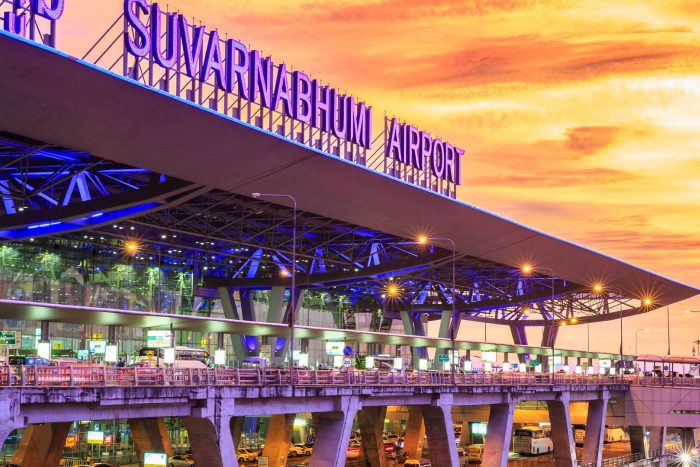
Suvarnabhumi Airport (BKK) and Don Mueang International Airport (DMK) sit on opposite sides of Bangkok. If you land at one on an international flight and your next flight leaves from the other, Thailand's own rules treat that transfer differently from a connection at a single airport. This page sets out what actually happens and how much time to allow for it.
Why this is not a same-airport connection
Thailand's aeronautical information publication names exactly eight airports where a passenger's checked baggage can be sent straight through to a connecting flight and cleared through customs at the final airport instead of the first, with immigration still cleared at the first port of arrival for every passenger: Suvarnabhumi, Chiang Mai, Mae Fah Luang-Chiang Rai, Krabi, Phuket, Samui, Trat and Udon Thani. Don Mueang is not one of them.
That means a passenger arriving internationally at Suvarnabhumi with an onward domestic flight from Don Mueang clears immigration and collects and clears their own baggage through customs at Suvarnabhumi, whether the two flights are on one ticket or two. The rule comes from Thailand's Aeronautical Information Publication, GEN 1.3, not from any airline, so no airline schedule or booking choice can shortcut it.
Suvarnabhumi to Don Mueang, step by step
Four things happen before you reach the domestic departure gate, in this order:
- Clear immigration at Suvarnabhumi Airport as any other international arrival.
- Reclaim your checked baggage at the arrivals hall, since it cannot have been through-checked to a Don Mueang flight.
- Clear customs through the green channel, for nothing to declare, or the red channel, for goods to declare.
- Travel to Don Mueang Airport and check in again as a fresh departure, with a new boarding pass, a new bag drop and a new security screening.
Don Mueang to Suvarnabhumi, the reverse direction
The trip in reverse skips one step. A domestic arrival at Don Mueang clears no immigration or customs, so the sequence is simpler: collect your checked baggage, travel to Suvarnabhumi, then check in as a fresh international departure with the standard security and departure formalities.
This is the easier direction, because it avoids the step that can slow a Suvarnabhumi-first transfer: international arrivals immigration. Going Don Mueang first, that step does not exist at all.
Which travellers this affects
Bangkok's two airports are not interchangeable for domestic flights. Suvarnabhumi carries the international and full-service operation, and several domestic carriers are based at Don Mueang instead, which is why an international arrival at one airport can have its onward domestic flight leave from the other.
See Bangkok flights information for which airlines currently use which airport. Airlines do move between the two airports over time, so check a specific carrier's own page, such as Bangkok Airways, for its current Bangkok base.
The free shuttle between the two airports
Airports of Thailand (AOT) runs a free shuttle bus between the two airports, roughly every 30 minutes from 05:00 to 24:00 (as of 2026-09-03; check before relying on it for a late-night connection). Suvarnabhumi's own transport page states that the service is "exclusively available for passengers transferring between Suvarnabhumi and Don Mueang airports", and asks for a flight ticket or proof of onward travel plus a passport or national ID. Passengers who are not connecting, and members of the general public, are not eligible to use it.
No operator publishes a road journey time for the crossing itself, and reported figures range from about 50 minutes to two hours depending on Bangkok's traffic. There is also no rail link between the two airports: the Airport Rail Link serves only Suvarnabhumi and the SRT Red Line serves only Don Mueang, so the shuttle, a taxi or a public bus are the ways across.
How much time to allow
No airport or airline publishes a single minimum connecting time for this route, because no single carrier is responsible for the whole journey. The honest answer is to plan the crossing as a half-day undertaking, not a same-terminal connection.
Three things drive the range. Immigration and customs at Suvarnabhumi is the biggest variable, taking anywhere from a few minutes to well over an hour depending on the time of day, and the road crossing itself typically runs 50 minutes to two hours. The arrival airport then needs a completely fresh check-in, bag drop and security screening before that flight's own check-in cutoff.
Suvarnabhumi has been extending its automated immigration gates to more nationalities during 2026, which can shorten the immigration step for a passenger whose nationality now qualifies. Eligibility has been changing through the year, so it is worth checking before you travel.
Baggage and separate tickets
Because Don Mueang is outside Thailand's through-check list, no ticket type changes the basic mechanics: your bag cannot be checked straight through to a Don Mueang departure, whether the international and domestic flights are on one ticket or two. What ticket type does change is who is responsible if something goes wrong.
On a single itinerary sold by one airline or alliance, the carrier that sold the whole journey is normally responsible for rebooking a passenger who misses a connection because of its own delay. On two separately bought tickets, each is an independent contract: the second airline has no visibility of the first flight's delay and no obligation to hold the flight or rebook you, so you carry the cost of a new ticket yourself.
Booking this transfer as two separate tickets is what turns an already inconvenient crossing into a risk you carry alone.
Frequently asked questions
Who can use the free shuttle between Suvarnabhumi and Don Mueang?
The shuttle is reserved for passengers connecting between the two airports, not for the general public or for anyone travelling into the city. Have your onward flight ticket, or other proof of onward travel, ready along with your passport or national ID before boarding.
Do I need to submit Thailand's arrival card if I am only connecting to a domestic flight?
Yes. Because Don Mueang is not on Thailand's through-check list, a passenger transferring this way clears immigration at Suvarnabhumi in full, the same as any other international arrival, so the Thailand Digital Arrival Card (TDAC) and the usual arrival formalities still apply. The card is free to complete online before you land.
Does Thailand's 2026 visa-free change affect my stay?
Thailand's visa-free stay for many nationalities is due to shorten from 60 to 30 days from 15 September 2026, following a Cabinet decision published in the Royal Gazette. If your travel falls on or near that date, check the current rule for your nationality with Thailand's immigration authority or your airline before you fly, since exemptions and timing can still be adjusted.