!
Latest updates
Hua Hin Airport (HHQ): one scheduled route, and the international plan
Updated 15th Oct 2026
Surat Thani Airport (URT): the mainland way to Koh Samui, Koh Phangan and Koh Tao
Updated 15th Oct 2026
U-Tapao Rayong-Pattaya International Airport (UTP): who runs it and what is being built
Updated 15th Oct 2026
Nakhon Si Thammarat Airport (NST): the 2023 terminal, airlines and getting into the city
Updated 15th Oct 2026
Hat Yai Airport (HDY): terminals, getting into town and Bangkok flights
Updated 15th Oct 2026
Khon Kaen Destination Guide
Updated 6th Sep 2026
Khon Kaen is one of the four big cities of Isaan, Thailand's northeast, alongside Nakhon Ratchasima, Udon Thani and Ubon Ratchathani. It is not the largest of them, and Nakhon Ratchasima is usually ranked ahead of it. What it has instead is administrative weight, a very large university and a conference trade.
This is not a resort town. Laos and Vietnam each keep a consulate general in the city, a marker of its administrative and trade role facing Indochina. The sections below cover the university, the convention centre, the lake, the chedi at Wat Nong Wang, the National Museum and the silk district at Chonnabot.
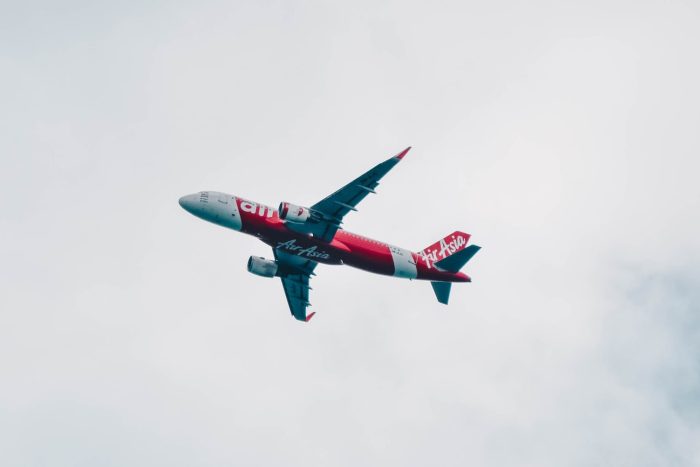
Flights into the city land at Khon Kaen Airport, and that page covers the terminal, the airlines and the transfer into town. The route pages carry the schedules for Bangkok to Khon Kaen and Chiang Mai to Khon Kaen.
Khon Kaen University
Khon Kaen University was established in 1964, one of four regional universities set up under a national decentralisation plan. It started as an institute of technology teaching engineering and agriculture. It now has more than 40,000 students across 19 faculties, three colleges and one school, on two campuses.
The main campus is in the northwest of the city, a few kilometres from the centre, on a site the university gives as 5,500 rai at its founding. It is one of nine institutions the government has designated a National Research University. The university describes itself as the largest in Thailand outside Bangkok.
The convention centre
The Khonkaen International Convention and Exhibition Center, known as KICE, sits in the Mueang Kao subdistrict near the centre. It was built to raise the city's standing as a MICE destination, the industry term for meetings, incentives, conferences and exhibitions, and it opened in 2017.
The venue's own hall specifications give a total of about 12,190 square metres, made up of 7,510 square metres of indoor exhibition space and 4,680 square metres outdoors. Ceilings reach up to 15 metres and the floor in designated areas is rated to 2.5 tonnes per square metre, built for heavy exhibits such as machinery. Capacity is given as over 10,000 attendees.
Bueng Kaen Nakhon and the night market
Bueng Kaen Nakhon is a lake in the middle of the city, reported at roughly 100 hectares, with a walking, jogging and cycling path of about 4km around the shore. Paddle boats are for hire on the water. Temples and parks line the edge, Wat Nong Wang among them.
A night market runs on the eastern shore near Wat Nong Wang from around 17:00, selling street food, clothing, handicrafts and souvenirs.
Wat Nong Wang and its nine-storey chedi
The chedi at Wat Nong Wang, Phra Mahathat Kaen Nakhon, stands 80 metres tall on a base 50 metres square. Nine internal storeys are open to visitors and each holds a different small exhibit, so the building is one you walk up.
The first floor holds Buddha relics and monks' alms bowls. The second is laid out as an Isaan museum of everyday historical objects, with murals. Further floors cover the region's old doors and windows and its Buddhist iconography, and the top floor is a viewing level over the city.
Published opening times for the upper floors differ, so check on arrival instead of planning the day around one of them.
Khon Kaen National Museum
The National Museum opened to the public in 1972 and sits a few kilometres from the city centre. Its collection covers the prehistory of the Khon Kaen area and the Dvaravati and Khmer periods that followed.
Exhibits include a human skeleton roughly 3,000 years old and tools from the Ban Chiang site in Udon Thani, carved stone boundary markers from Kalasin, Khmer-period stone lintels, dinosaur fossils, old musical instruments, pottery and Buddha images.
It opens Wednesday to Sunday, 09:00 to 16:00, and is shut on Monday and Tuesday. That closure catches people on a short midweek stop, and it is worth confirming before you build a day around it.
Chonnabot and the silk district
Chonnabot, about 55km south of the city, is the centre of Isaan's mudmee silk weaving. Mudmee is an ikat technique, meaning the threads are tie-dyed to a pattern before they go on the loom. Designs include hook motifs, naga figures and bamboo leaves.
The road in front of the district office, about 1km of it, is lined with silk shops, and the Thai Silk Exhibition Hall, Sala Mai Thai, shows the weaving process and the local history behind it. The district has eight subdistricts and around 80 villages. Hua Fai village won a national One Tambon One Product (OTOP) handicraft award in 2006 and takes homestay visitors who want to watch the work done.
At that distance a visit is a half-day out of the city, so it is worth putting in the plan rather than saving for a spare afternoon.
Getting around town
Khon Kaen has had a light rail plan on the books for years. As of 2026 the scheme is still at the pre-construction stage, with the funding arrangement and the land acquisition unsettled.
Getting around the city today means road transport: buses, tuk-tuks, ride-hailing and the shared pickup trucks known as songthaews.
Frequently asked questions
How big is Khon Kaen?
Two figures are quoted for Khon Kaen and they count different areas: 114,459 people registered inside the city municipality's own boundary in 2019, and 416,988 in the wider built-up area in 2024. The first is the municipality alone, while the second takes in the developed area around it. The two are also five years apart, so neither one replaces the other.