!
Latest updates
Thailand Tourist Visas, Entry Rules and Visa Runs
Updated 11th Sep 2026
Frequent Flyer Programmes in Thailand: Which Is Worth Joining
Updated 10th Sep 2026
Andaman or Gulf: Five Thai Coasts, When to Go, and the Airport for Each
Updated 10th Sep 2026
Thailand Travel Tips: Riding, Rules and What to Carry
Updated 10th Sep 2026
Thai Phrases for the Airport: What to Say at a Counter or Gate
Updated 10th Sep 2026
Useful Phrases at the Airport
Updated 10th Sep 2026
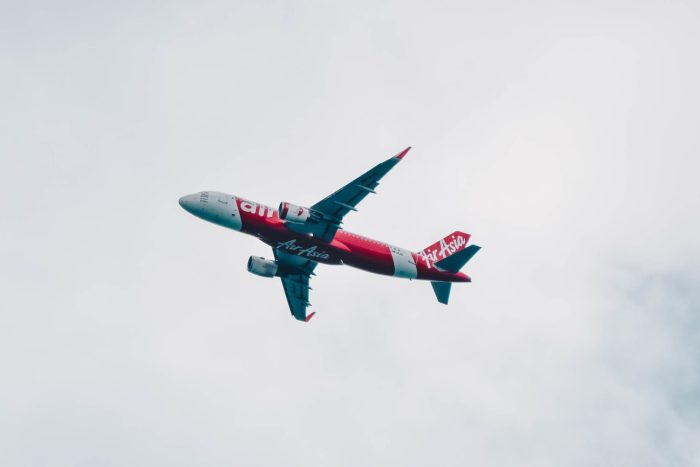
This page is a short list of things a passenger says at a Thai airport counter or gate, written in Roman letters. It covers the politeness ending, the sentences that get a conversation switched into English, and the words and question words for the airport itself.
Most signs at Suvarnabhumi carry English
A survey of the signs at Bangkok Suvarnabhumi Airport, published in 2022, photographed 914 signs between June and August 2021 and found English on 705 of them. The largest single group, 326 signs, carried Thai and English together, and the count covered the arrival hall, the departure hall, the check-in counters and the gates.
That count is Suvarnabhumi's alone. Bangkok Don Mueang Airport is a separate airport and it is not in that survey, and neither are Thailand's smaller domestic airports.
This page is for the other half of the job: the moment when you have to say something to a person, at a bag drop, at a gate, or after a wrong turn.
How the spellings on this page work
The spellings on this page use the letters of the official transcription system published by the Office of the Royal Society of Thailand. The United Nations approved a revised version of it in 2002 and publishes the full table. That system was written for Thai words and names in general rather than for a phrase book, and no institution publishes airport phrases in it, so the forms below are worked out from its table and its own worked examples rather than copied from one.
It leaves out two things that matter at a counter. It ignores tone marks entirely, and it writes short and long vowels with the same letters. Tone and vowel length both change what a Thai word means, so a spelling can be right on the page and still land wrong when you say it.
The clearest example is on this page: the polite ending a woman uses in a statement and the one she uses in a question are listed separately in the course these phrases come from and differ only in tone, and this system writes both of them kha.
The polite ending follows your own gender
Thai sentences are softened with a particle on the end, and which one you use depends on whether you are male or female. It follows the speaker, not the person being spoken to, and it goes on the end of what you say.
A man ends with khrap and a woman ends with kha, with a different tone when she is asking a question rather than making a statement. It is not a word for "sir" or "madam".
Asking someone to switch to English, and asking for help
These are worth more than any single noun, because they hand the conversation to whoever has both languages.
| What you want to say | Say |
|---|---|
| Can you speak English? | khun phut phasa angkrit dai mai |
| Please repeat that | phut ik thi |
| Speak slowly, please | phut cha cha noi |
| I do not understand | mai khao chai |
| Help! | chuai duai |
The word for help on its own, chuai, doubles as a way of softening a request, and is sometimes translated as "please".
One place a passenger has to ask a stranger something is the move between Bangkok's two airports. Transferring between Suvarnabhumi and Don Mueang covers how that works.
Greetings, thanks and apologies
| What you want to say | Say |
|---|---|
| Hello | sawatdi |
| Thank you | khop khun |
| Excuse me, or I am sorry | kho thot |
| Never mind, or it is all right | mai pen rai |
Words and question words for the airport
| English | Thai in Roman letters |
|---|---|
| airport, airfield, airstrip | sanam bin |
| passport | nangsue doen thang |
| ticket | tua |
| travelling bag, suitcase | krapao doen thang |
| luggage, baggage | samphara |
| door, gate | pratu |
| window | na tang |
| bathroom | hong nam |
| toilet, washroom | hong suam |
| queue, line | khio |
| to be late, delayed | la cha |
| to cancel | yok loek |
| where, which place | thi nai |
| what | arai |
| how much (asking a price) | thao rai |
| how far, to what extent | khae nai |
| can I, may I | dai mai |
| this, that | ni, nan |
| you | khun |
| I, said by a man | phom |
| I, said by a woman | dichan |
| to go | pai |
Numbers
One to ten runs nueng, song, sam, si, ha, hok, chet, paet, kao, sip. A hundred is roi and a thousand is phan.
Words this page does not carry
Five words a passenger would expect are not here: boarding pass, check-in, aisle seat, window seat and excess baggage. For those, use the sentence above to move the conversation into English, or check your carrier's own wording before you fly. Thailand's domestic airlines compared covers the carriers whose counters you are likely to be standing at.
The paperwork behind nangsue doen thang is a subject of its own: Thai tourist visas and visa runs covers it.
Frequently asked questions
How do you say airport in Thai?
Sanam bin, in the transcription used on this page. The same word covers an airfield or an airstrip.
What do I need to say at a Thai airport check-in counter?
A greeting with the polite ending that matches your own gender, and then khun phut phasa angkrit dai mai if you need more than that. The counter vocabulary for bags and seats is not on this page, so the request to switch to English is the one doing the work.
Which Thai phrases are most useful for a visitor flying within Thailand?
The polite ending, and the sentence that asks whether the other person speaks English. Those two are the ones to learn first: the question moves the conversation to whoever has both languages.
Will these spellings be understood if I read them out?
Sometimes. The system behind them ignores tone and vowel length, and both of those change what a Thai word means, so a spelling that looks right can be heard as something else. Point at the thing you mean, or hand over the ticket, when the sentence does not land.
Where do the phrases on this page come from?
The sentences and the everyday words are from the US Peace Corps' own Thailand language course of 2005, mirrored here because the government copy is not currently served; it is free and has audio for every lesson. The airport nouns are from the SEAlang Library's Thai dictionary, which draws on the Thai Dictionary Project.